Guides
Revenue recognition for usage-based billing (ASC 606)
November 16, 2026
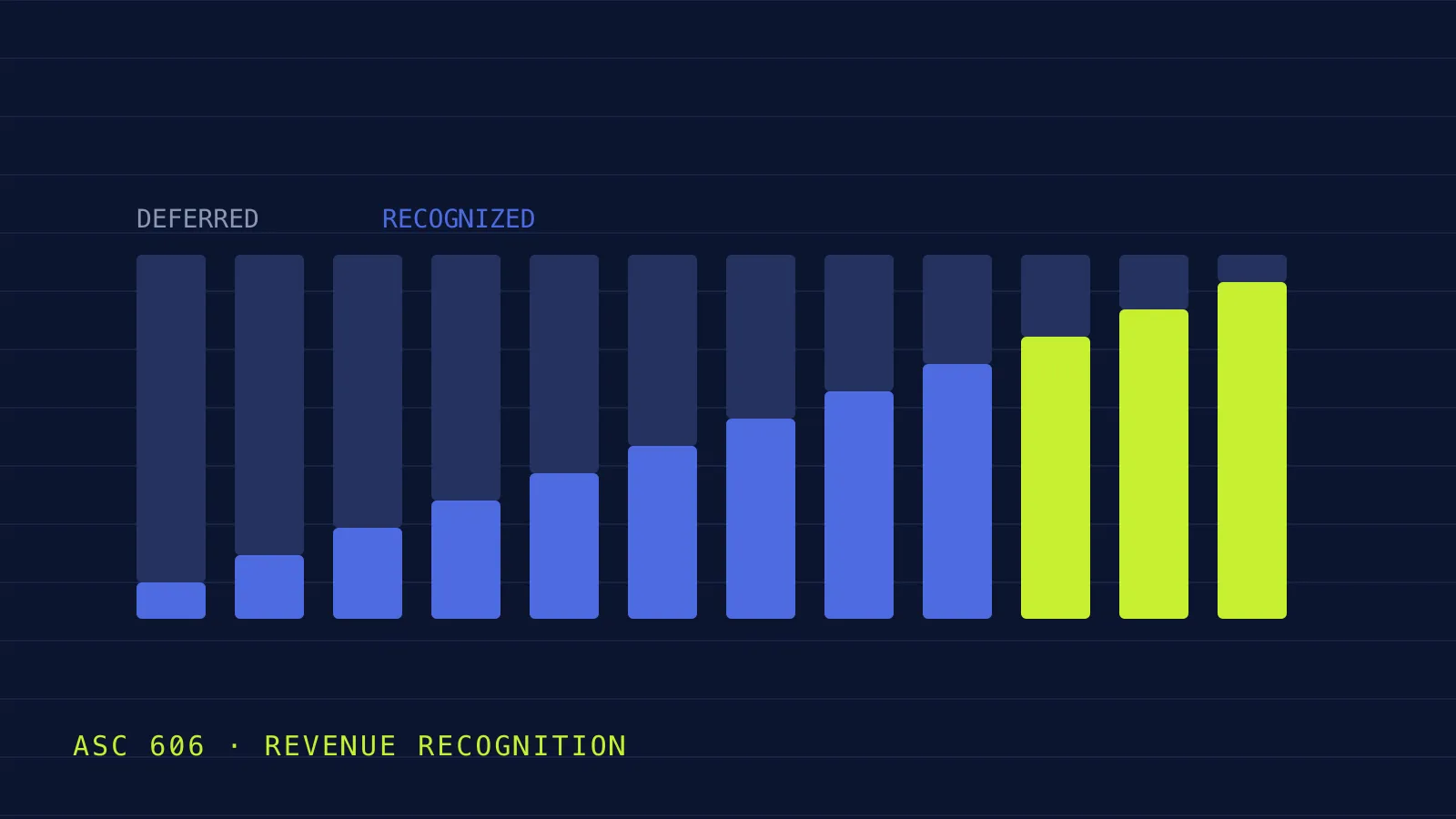
Usage-based billing creates revenue that is easy to invoice and harder to recognize. Under ASC 606 (and IFRS 15), revenue follows the delivery of the service, not the invoice date. For usage, that means revenue is recognized as the customer consumes.
Pure usage
When a customer pays in arrears for what it used, revenue for the period is the usage of the period. The difficulty is volume and timing: late events and corrections change a period that finance may already have closed.
Prepaid credits
Cash received for credits is a liability (deferred revenue) until the credits are used. Each drawdown moves an amount from deferred to recognized revenue. Expired credits are recognized as breakage.
Commitments and true-ups
A minimum commitment is recognized as usage occurs, with the shortfall recognized when it becomes billable. Discounted rate cards tied to a commitment affect the transaction price of the whole contract.
Why it belongs in the billing platform
When the billing platform produces the revenue schedules, finance closes the month on the same data that produced the invoices: no export, no reconciliation, an audit trail from the event to the journal entry. That is why our methodology gives tax and revenue recognition the second-highest weight.
The platforms that document revenue recognition as a core strength are listed on usage-based billing with revenue recognition.
Was this guide useful?
Get the next guide and every ranking update by email.
Ranking updates only. Unsubscribe at any time. See our privacy policy.