Guides
Switching to usage-based pricing: what your billing software has to do
November 16, 2026
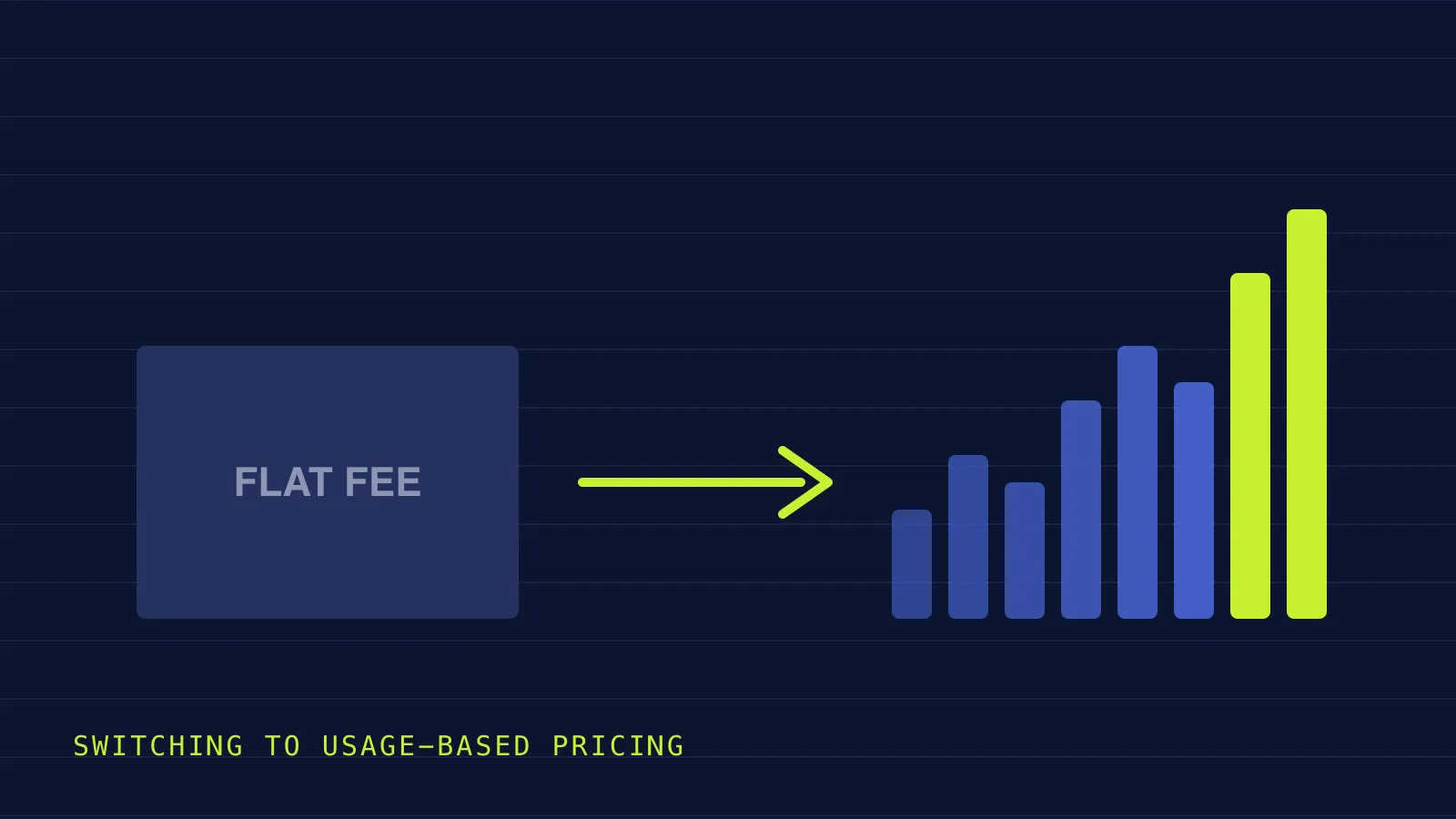
Moving to usage-based pricing is a pricing decision, but it fails or succeeds in billing. A subscription system sends the same invoice every month; a usage-based billing system has to count what each customer consumed, price it against that customer’s deal and explain the result on the invoice. Before you pick a platform, check that it does these six things on its own public documentation.
1. Ingest usage events reliably
Every billable action becomes an event: an API call, a model request, a gigabyte stored. The platform needs an ingestion API or SDK, and ideally a connector to your data warehouse. Ask what happens when the same event is sent twice (deduplication) and when an event arrives after the billing period closed (late events). Both happen in production every week.
2. Aggregate and rate
Raw events are summed, counted or averaged into billable quantities, then priced: per unit, by tier, by volume, with included allowances. If your pricing will change, and it will, check that price versions can coexist so existing customers keep their terms.
3. Mix usage with what you already sell
Few companies drop subscriptions overnight. Most add a usage component to a platform fee or a seat price. The platform has to put both on one invoice and prorate plan changes. Our page on SaaS billing and metered usage lists the platforms that document this.
4. Sell credits and commitments
Enterprise buyers want a budget. Prepaid credits and annual commitments give them one: the balance draws down as usage arrives, and overage is billed at a contract rate. See the platforms that document prepaid credits and commitments.
5. Show customers what they are spending
Bill shock is the main reason customers push back on usage pricing. Real-time usage dashboards, threshold alerts and spend caps prevent it, and invoice previews let finance check a bill before it goes out.
6. Close the books on usage revenue
Usage revenue is recognized as it is consumed, and unused prepaid credits are deferred revenue. If billing and revenue recognition live in two systems, someone reconciles them by hand every month. The platforms that make revenue recognition a core strength are listed on usage-based billing with revenue recognition.
How to compare platforms
Our ranking checks each of these points on every platform’s own pages, and the methodology explains the weights. To narrow the list to your case, answer the three questions of the platform finder.
Was this guide useful?
Get the next guide and every ranking update by email.
Ranking updates only. Unsubscribe at any time. See our privacy policy.