Guides
Prepaid credits, commitments and overages in usage-based billing
November 16, 2026
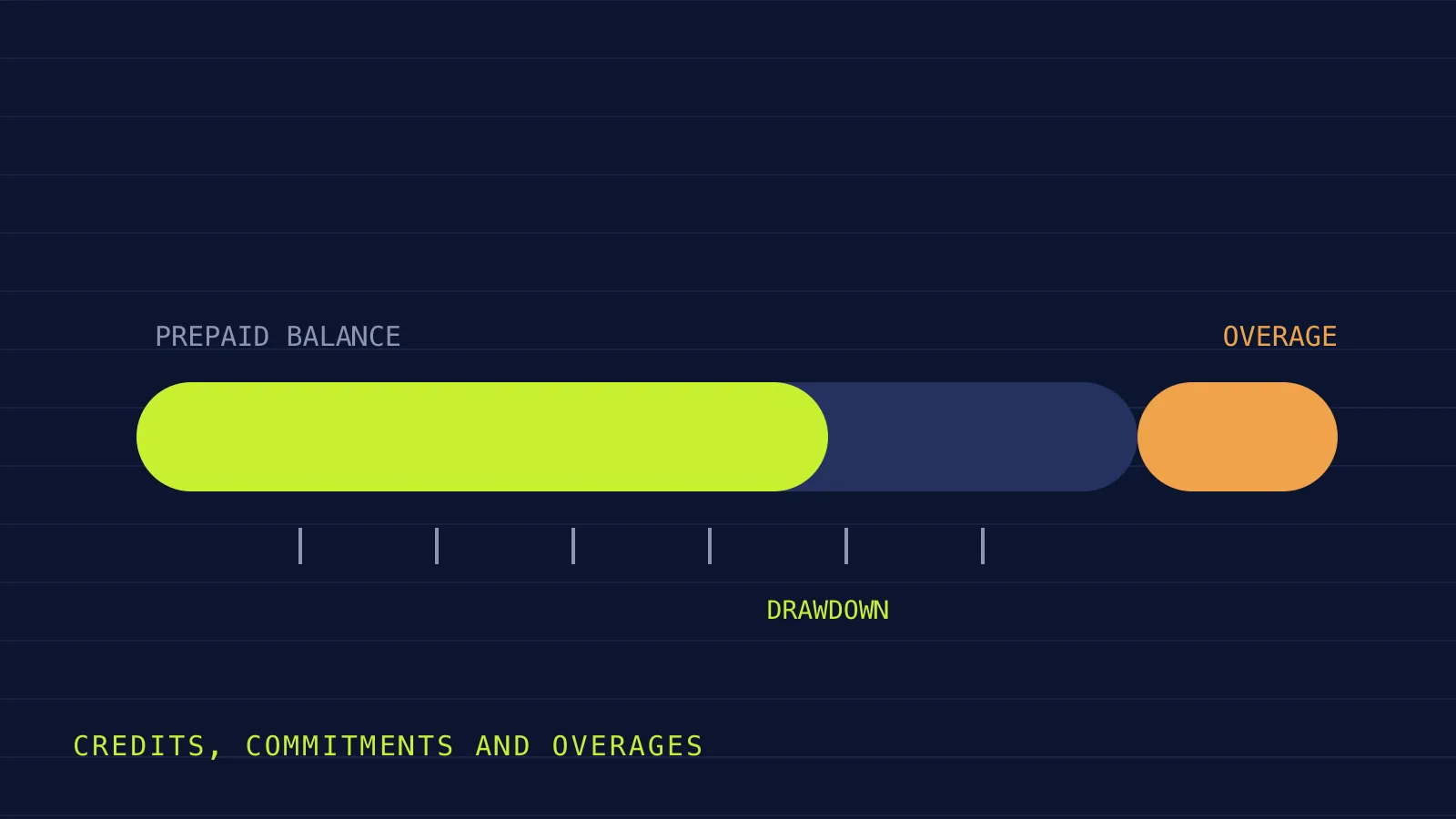
Prepaid credits and commitments are how usage pricing gets past procurement. The buyer gets a predictable budget, the vendor gets cash up front and a floor on revenue. They also add the most complexity to billing.
The three common structures
- Prepaid credits. The customer buys a balance, in currency or in units. Usage draws it down. When it runs out, usage either stops, triggers a top-up or is billed as overage.
- Minimum commitments. The customer commits to spend a minimum over a period. If actual usage is lower, a true-up invoice covers the difference.
- Committed rate cards. The contract fixes discounted unit prices in exchange for a commitment. Usage above it is billed at the contract rate or at list price.
What the billing platform has to do
It has to draw the balance down in real time, apply the right rate card to each customer, bill overage automatically, and warn the customer before the balance runs out. Expiry rules matter too: credits that expire are revenue on the expiry date, not when they were sold.
What finance has to see
Prepaid credits are deferred revenue until they are consumed. The billing platform should report the outstanding balance, the drawdown per period and the breakage on expiry, ideally feeding revenue recognition directly.
Platforms that document it
See the platforms that document both prepaid credits and commitments on prepaid credits and commitments, in ranking order.
Was this guide useful?
Get the next guide and every ranking update by email.
Ranking updates only. Unsubscribe at any time. See our privacy policy.